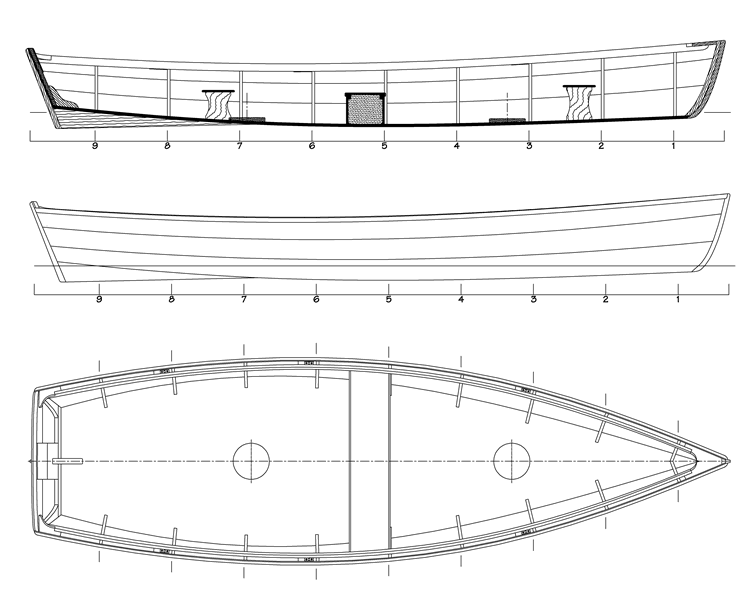
Beyond the Blueprint: Unveiling Hidden Secrets in Boat Building
Building a boat is a monumental undertaking, a testament to human ingenuity and craftsmanship. While countless guides detail the "how-to," few delve into the often-overlooked aspects that truly separate a sturdy vessel from a soggy disappointment. "How to Build a Boat with Detailed Plans for Maximum Durability" provides a solid foundation, but let's explore some less-trodden paths to maximize your build's longevity and performance. This isn't just about following instructions; it's about understanding the *why* behind every cut and joint.
The Unsung Heroes of Durability: Beyond the Obvious
Most boat-building guides focus on wood selection, joinery techniques, and the application of sealant. But what about the often-ignored factors that contribute to long-term success? Let's explore some key questions and answers.
Q: How does the environment truly impact my boat's lifespan, and how can I plan for it?
A: This goes beyond simply choosing rot-resistant wood (though crucial!). Consider microclimates. A boat stored in a damp, poorly-ventilated shed will deteriorate faster than one kept in a dry, well-ventilated location. UV radiation is another silent killer. The sun's rays degrade wood fibers over time, leading to cracking and weakening. Integrating this understanding into your design and storage plan is paramount. Think about incorporating UV-resistant finishes and ensuring proper ventilation during construction and storage. Data from marine research institutions shows a significant correlation between sun exposure and hull degradation, highlighting the need for proactive UV protection.
Q: What role does wood grain orientation play in structural integrity, and how can I optimize it?
A: Many plans simply state "use strong wood," but the *orientation* of the wood grain is critical. Running the grain along the length of a beam maximizes strength, while running it across significantly reduces it. Proper grain alignment is crucial in high-stress areas like the keel and frames. Ignoring this can lead to catastrophic failures. Imagine building a house with the studs running horizontally â€" it would be incredibly weak! This principle applies equally to boat building. Carefully studying the plans and ensuring the grain runs in the direction of maximum load is vital. References to engineering principles (like those found in materials science textbooks) reinforce this importance.
Real-World Lessons: Learning from Others' Mistakes
Learning from others' experiences is invaluable. Let's examine a case study.
The Case of the "Leaky Lady":
A seasoned boat builder I know once encountered a significant problem with a client's boat. While the construction followed plans meticulously, the client neglected regular maintenance. The result? Accumulated water damage, leading to rot in unseen areas. This highlights the critical importance of ongoing inspection and maintenance. Regularly check for cracks, leaks, and signs of rot. Early detection significantly reduces the cost and effort needed for repairs.
Beyond the Book: Innovative Solutions for Maximum Durability
Let's explore some innovative approaches rarely discussed in standard boat-building guides.
Harnessing Modern Materials:
While traditional methods are valuable, incorporating modern materials strategically can boost durability. For instance, using epoxy coatings not only seals the wood but also adds significant strength and protection against environmental degradation. Furthermore, fiberglass cloth embedded in epoxy can reinforce weak points and add a considerable degree of flexural strength. This approach combines the beauty of wood with the resilience of modern materials, offering a unique advantage.
Advanced Joinery Techniques:
Beyond basic lap joints and mortise and tenon, explore advanced joinery techniques like scarf joints and interlocking designs. These advanced techniques distribute stress more effectively, increasing the strength and longevity of the boat. Research papers on historical shipbuilding techniques often showcase ingenious joinery solutions that can inspire modern builders.
Building a boat is a journey, not a sprint. By understanding the subtle nuances and embracing innovation, you can ensure your vessel stands the test of time, becoming a testament not just to your skills, but to your dedication to excellence.
0 comments:
Post a Comment
Note: Only a member of this blog may post a comment.